Contact Us!

Discover a united team working to provide reliable engineering solutions.

icon_widget_image Luni-Vineri: 9am - 6pm; Weekend: Închis icon_widget_image Splaiul Unirii nr. 165, TN Offices 2, et.8, Sector 3, București, România icon_widget_image +40 37 4063 488 Fax: +40 374 090 914
critical infrastructure

Critical infrastructure built to NATO standards in record time, and a new initiative: AI avatars that enhance team efficiency12 min. de citit

In an article published by IBC Focus in the 2026 edition of the Top 100 General Contractors in Construction, Cătălin Podaru, CEO of Leviatan Group, spoke about the strategic projects developed by Ubitech Construcții, the challenges of managing critical infrastructure projects, and investments in advanced technologies, artificial intelligence, and team skill development—all of which are helping to transform the way work is done.

How did 2025 turn out for Ubitech Construcții operationally and financially? What were the most important projects or decisions for the company?

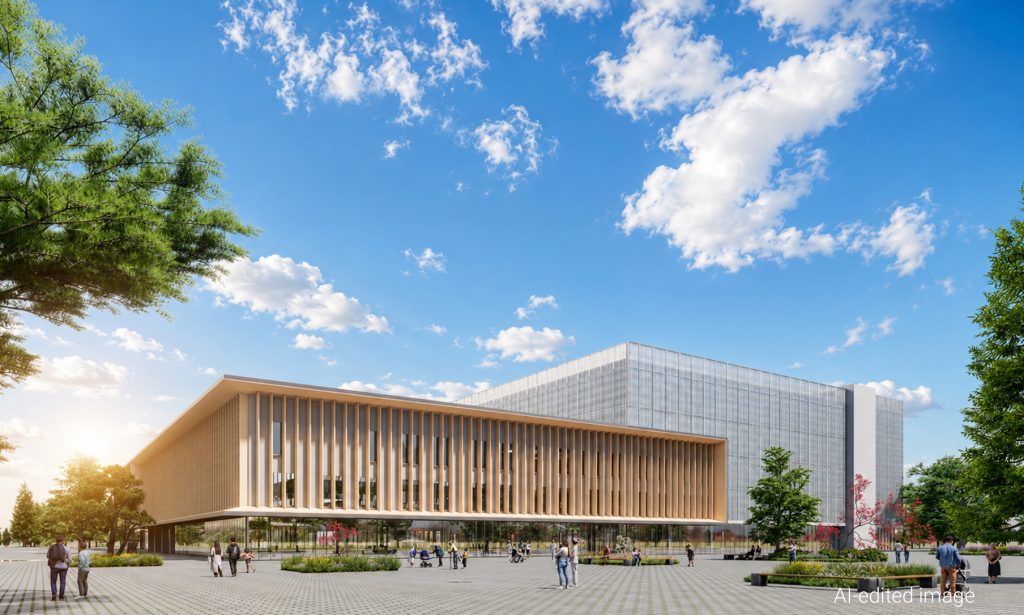
For Ubitech Construcții, 2025 was a year of strategic consolidation, set against a market marked by many challenges and uncertainties. We focused on public and special projects characterised by high technical complexity and real community impact, with defense projects accounting for a significant portion of our work. Thus, we completed the internal commissioning phase for Phase I of the expansion and modernization of the Câmpia Turzii Air Base (one of the largest public projects in Romania), constructed an NOC and CSOC (Network Operations and Cybersecurity Center) facility in Sibiu, and developed new facilities for the “Dimitrie Cantemir” National Military College in Breaza, while also adding new major projects to our portfolio. These include the new Clinical Hospital for Pneumology and Infectious Diseases in Brașov, which will cover over 40,000 square meters and have 279 beds, as well as the modernization of facilities at the Valea Poienii training range, a key site for training specialized forces in the field of CBRN (chemical, biological, radiological, and nuclear) defense.

While projects show what we build, our technology decisions show how we bring them to fruition. Last year, we accelerated the company’s digital transformation, focusing on a holistic Digital Twin, automation, and artificial intelligence-based solutions. These initiatives have provided us with greater predictability, quality, and efficiency in execution by connecting field data, BIM models, and operational processes into a cohesive ecosystem. Thus, 2025 was not only a year of projects but also a year of investing in the way we work, which will support the company’s long-term competitiveness.

Financially, 2025 saw a decline in revenue compared to 2024, driven by the sector’s challenging economic environment and a decision to realign the portfolio toward new project types.

You are involved in projects with a high degree of technical and strategic complexity. What kind of projects place the greatest pressure on a construction company today?

In our experience, pressure doesn’t come from a single source, but from the overlap of multiple demands. We develop public and specialized infrastructure projects where safety, functionality, security, and strict deadlines must be managed simultaneously—any technical change immediately affects costs, planning, and site organization. This complexity has forced us to be more rigorous, anticipate risks, integrate digital solutions, and maintain constant communication among all teams involved; the experience we’ve gained from strategic projects now enables us to deliver responsibly, regardless of market pressures.

At the industry level, the greatest pressure comes from large public projects with European funding and strict completion deadlines—transportation, defense, and healthcare infrastructure. Missing a deadline no longer just means penalties, but the loss of funding. Compounding this risk is the financial pressure on the contractor: expenses start piling up from day one, while payments come in installments, with withholdings and long payment terms—it’s no coincidence that 2025 saw nearly 1,400 insolvencies in the construction sector.

Each sector has its own unique dynamics of pressure: in transportation, large volumes and European deadlines constrain planning and logistics; in security and defense, the pressure reaches its peak due to high standards for security, compliance, and operational coordination; and in healthcare, technical complexity is compounded by the absolute rigidity of deadlines. These are precisely the projects where the difference lies in the ability to plan realistically, make quick decisions, and maintain quality through to the end—and this is where experience and operational discipline become an execution company’s most valuable asset.

Which projects best define the direction the company is heading in today?

Our direction today is defined by projects focused on internal transformation, which we treat with the same seriousness as our business projects. We constantly invest in team development programs and AI literacy, because technology only makes an impact when people are prepared to use it.

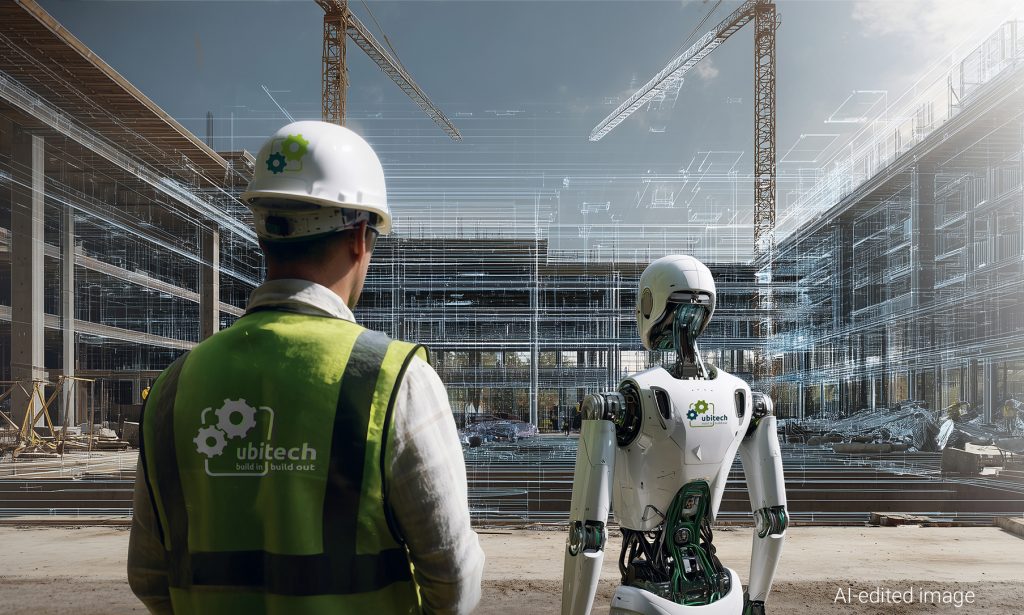
The most ambitious initiative is creating AI role-based avatars—systems integrated into daily workflows that take over an entire role within the company, coordinated by specialists. We are already developing avatars for Cost Estimates, Technical Proposals, Public Procurement, and Procurement, with specific efficiency goals.

Another high-impact initiative involves integrating virtual assistants into smart glasses so information from the BIM model and technical documentation can be accessed directly on-site in seconds. This approach also enables real-time comparisons between what is being built and what was designed, helping our specialists work faster, more collaboratively, and with greater precision in the years to come. These projects show how our specialists will work in the coming years.

Is there a point where a project’s complexity has less to do with the construction itself and more with the company’s ability to coordinate large volumes of information, teams, and decisions?

Certainly, and in the projects we’re working on, that’s actually the name of the game. The actual construction is just the visible part. Behind it lie enormous volumes of data that must be constantly cross-referenced. And the cost of uncoordinated information is very real: a discrepancy between plans discovered only on-site comes at a high price, and a fix that should take minutes can turn into days when building data is missing.

That is why we treat data as a strategic resource, just as important as materials or equipment. Artificial intelligence tools process this volume of data with speed and precision that would be impossible to achieve manually, but our specialists make the final decision. Team coordination and decision-making take place entirely within the BIM system: all disciplines contribute simultaneously to the same digital model, technical conflicts are resolved before construction begins, and information remains consistent from design through to operation. Since 2026, this approach has also been independently validated: the BSI Kitemark™ certification for BIM. Thus, complexity does not overwhelm us; rather, it becomes our competitive advantage.

What signals do you pay most attention to when trying to understand where the market is headed?

First and foremost, we monitor investment trends: budgets allocated to construction projects, tender schedules, the pace of European fund absorption, and the sectors toward which new funding is directed. Where contracts are signed today, construction will begin tomorrow, and this flow remains the market’s most reliable barometer. However, we also closely monitor the financial health of the construction supply chain (beneficiaries’ payment behaviour, trends in insolvencies, and subcontractors’ financial stability), because a market can look strong in volume while becoming fragile from within. We want to spot the cracks before they become visible in projects.

The second level concerns costs and technology. Prices for raw materials, energy, logistics, and labour costs—along with tax and regulatory changes—tell us how to bid and contract responsibly. And the pace of technology sends us perhaps the most important signal: the direction of the market is determined not only by how much is being built, but also by how it is built. The speed at which BIM, artificial intelligence, and automation are being adopted is already separating the companies that will matter tomorrow from those that are merely surviving today.

Are there projects that you view differently today than you did a few years ago, even though they remain financially attractive?

The way we evaluate a project has changed significantly. The numbers remain important, but they no longer tell the whole story. Today, two questions carry equal weight: what real impact does the project have on the community, and how sustainable is it over its entire lifespan? A contract may look flawless on paper and still fail this test.

That’s why we focus on projects that leave a lasting legacy—health, education, defense—and we think beyond the moment of completion. For us, the real difference lies between simply fulfilling a contract and building something that matters.

Is there a difference between companies that build on a scale and those that build systems that can handle complexity?

The difference exists and only becomes apparent when the project gets difficult. Scale can be achieved through accumulation: more people, more equipment, and more construction sites open simultaneously. Complexity, by contrast, requires a specific organizational approach: clear data flows, traceable decisions, specialized teams working within the same digital framework, and risks anticipated before they become problems. These are two distinct capabilities, and a mature company needs both—scale ensures the capacity to execute, while the system ensures control.

For us, this lesson came directly from the strategic projects we’re carrying out: given their level of demand, the ability to manage complexity is no longer a differentiator but a prerequisite. That is why we invested in BIM, Digital Twin, and automation before the market demanded them—because in an industry where margins are shrinking and every day of delay comes at a cost, performance is no longer measured solely in cubic meters of concrete, but in the ability to keep complexity under control right up to the last day of construction.

In recent years, many companies have invested aggressively in expansion. What investments truly make a difference in a construction business?

In our experience, the real difference comes when investments in technology and investments in people go hand in hand. Technology without people trained to use it remains an expense, not an investment, and talented people without modern tools waste energy on processes that could be automated. Real value emerges only where the two grow together.

This is the principle we’ve been applying for years: every investment in technology is matched by an investment in our team’s skills. We’ve adopted BIM and artificial intelligence-based solutions. Still, we’ve also consistently invested in development programs and AI literacy, because a tool that isn’t understood remains unused, no matter how powerful it may be. These consistent investments in people have also earned external recognition: the Top Employer certification, awarded to our group of companies for two consecutive years—in 2025 and 2026—by the Top Employers Institute. The results are evident where it matters most: in complex projects, where operational discipline and the team’s ability to work seamlessly with technology make the difference between meeting a deadline and missing it. In a market where many have grown horizontally, we have chosen to grow in depth, and this choice is proving to be our most valuable investment today.

What is the market getting completely wrong with profitability in the construction industry?

The market views profitability almost exclusively through the lens of what is being built—contract value, margin, cost per square meter. However, true profitability depends on how you build, and you must view it sustainably over the building’s entire lifespan, not just at handover.

A building may look impeccable at handover and still become a financial burden during operation because maintenance and operations (which, in the long term, can exceed the initial investment several times over) were not factored into the design phase. This is the warning we consistently sound, especially in the context of billion-scale investments in medical infrastructure: without true BIM management and without planning for operations from the outset, modern hospitals (as well as public buildings, industrial facilities, or critical infrastructure) risk becoming financial black holes rather than sustainable investments.

Solutions exist, and the difference lies in the concept of a holistic Digital Twin: not just a simple digital map of the building, but a living replica of the entire facility (spaces, flows, equipment, and operational decisions—all interconnected), which allows difficult questions to be answered as early as the design phase, not after the building has already been constructed. A valuable building doesn’t look good upon completion; it functions well even 10, 20, or 50 years from now. What’s missing isn’t the tools, but an understanding of their importance at all levels—and this is where the market has the most ground to make up.

In recent years, Ubitech Construcții has taken on projects with a high degree of technical and strategic complexity. Which project has had the greatest impact on how the company organizes its project execution today?

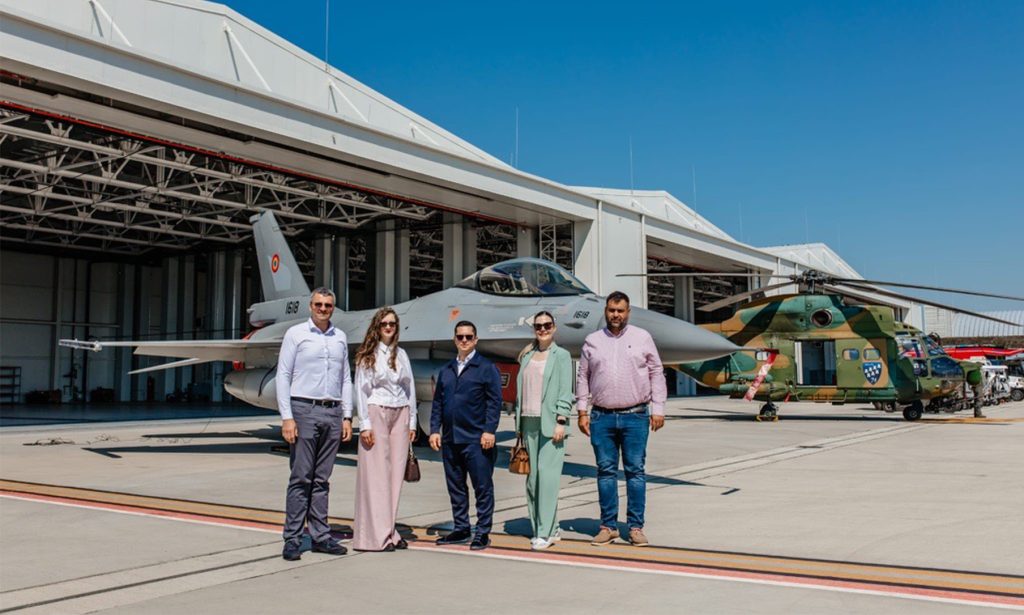
The best example is the expansion and modernization of the Câmpia Turzii Air Base, where we built the infrastructure for the F-16 aircraft. The work complied with Romanian aviation standards, NATO standards, and those of our American partner, which required us to adopt a new approach: build quality in from the start, not verify it at the end.

The project involved an impressive amount of work, with 20,000 cubic meters of reinforced concrete, 67,000 cubic meters of road concrete, 100 km of pipes and conduits, 1,000 metric tons of rolled steel, and 1,200 metric tons of reinforcing steel for the reinforced concrete elements and structures. In addition, we completed over 700,000 cubic meters of excavation and approximately 500,000 cubic meters of backfill, along with installing utility networks critical to the base’s development. We managed these volumes by integrating the design process with the construction site. The result validated our efforts: we completed Phase I in record time, 25% ahead of schedule, validating our integrated Design & Build model.

Beyond the technical aspects, this project shifted our perspective. Since this involved Romania’s critical infrastructure, every deadline carried national significance, as such work must be completed years before the aircraft are delivered. The fast pace at which we worked at Câmpia Turzii enabled the timely operation of the F-16s and paved the way for the future F-35s, in the context of the Romanian government’s efforts to acquire them. The team worked with what we call “professional patriotism,” and the discipline in execution acquired there has now become our internal standard, applied to every project.


You can read the full interview in “TOP 100 General Contractors in Construction 2026,” published by the IBC Focusagency.

PRACTICĂ & INTERNSHIP